The History of the
Keeper Ring
From royal practicality to a symbol of unbreakable British craftsmanship.
The Royal Guard
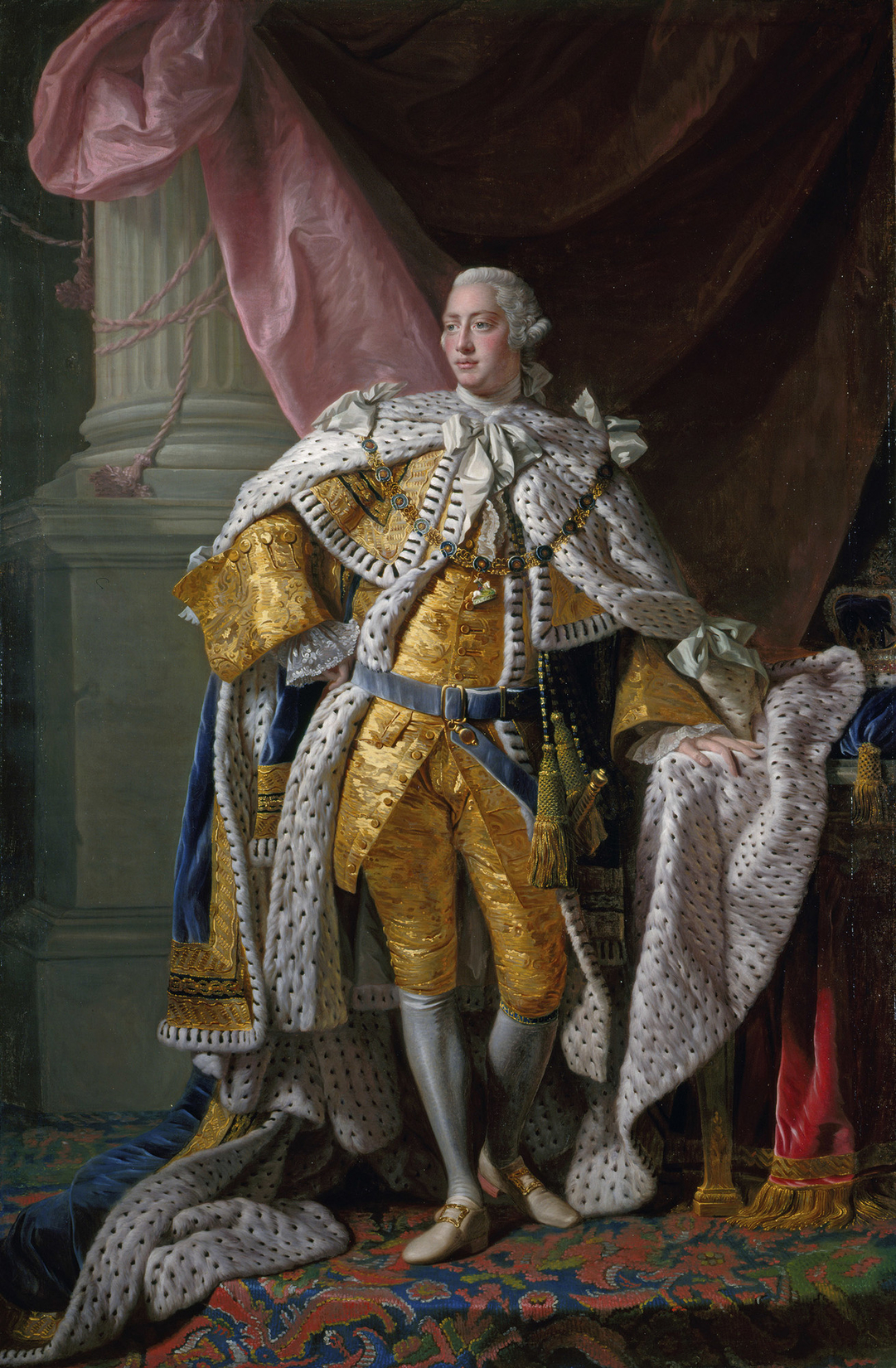
The keeper ring was born out of sheer necessity rather than sartorial ambition. In 1761, King George III presented Queen Charlotte of Mecklenburg-Strelitz with a spectacular diamond wedding band. However, 18th-century diamond settings—often "cut-down collets" backed with silver—were notoriously precarious.
According to royal jewellers' accounts of the era, the King commissioned a secondary, unadorned gold band to be worn tightly above the diamonds. This snug, heavy band was engineered specifically to "keep" the priceless diamonds from slipping off the Queen's finger. Thus, the concept of the "Keeper Ring" entered the British lexicon.
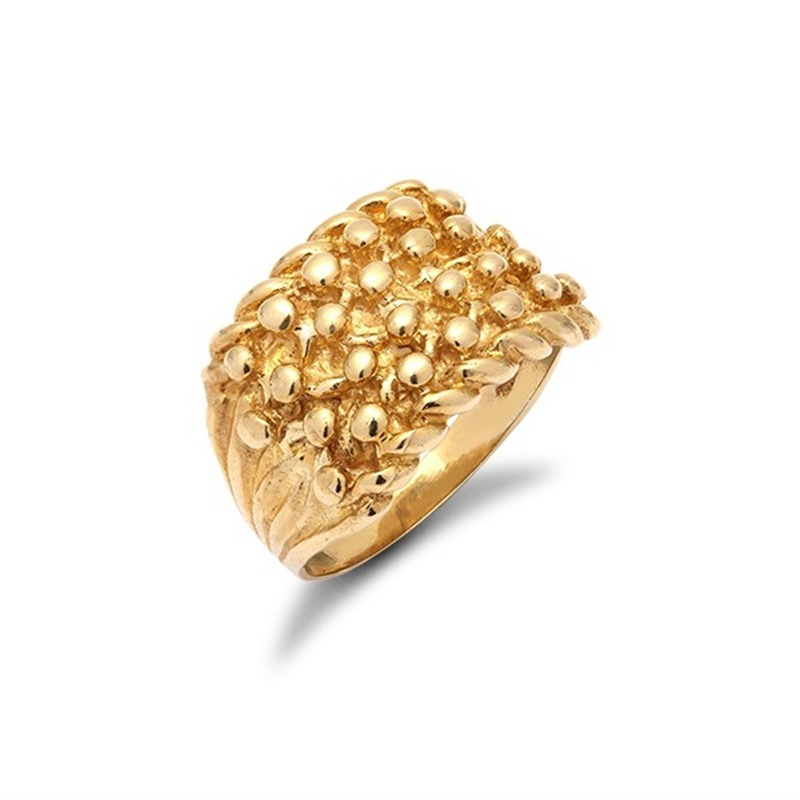
The Anatomy of the Era: The original 18th-century keeper rings lacked the braided textures we know today. They were forged as dense, D-shaped solid gold bands. The focus was entirely on weight and structural integrity—a philosophy that still dictates the smooth, heavy inner shank of our modern rings today.

The Pre-Betrothal Promise
As the Victorian era dawned and the middle class expanded, the keeper ring's purpose fractured into two distinct societal narratives.
In high society, it evolved into a "pre-betrothal" ring. According to social historians, it was gifted up to a year before a formal engagement while dowries and estates were negotiated. Presenting a heavy gold band signified that the recipient was "worth keeping."
Conversely, among the booming industrial working class, the keeper ring became the ultimate symbol of portable wealth. Men and women working in mills and factories required jewellery that could withstand brutal physical labour.
The Anatomy of the Era: Goldsmiths began carving patterns into the top of the ring. This wasn't merely decorative; a textured face brilliantly masked the inevitable scratches and dents incurred during manual labour, while the back of the band remained polished and smooth.
The Edwardian Braid
The turn of the 20th century marked the golden age of British jewellery manufacturing, centred heavily around the Birmingham Jewellery Quarter and London's Hatton Garden.
Master casters sought to push the boundaries of what a single solid pour of gold could look like. The keeper ring abandoned its flat profile and exploded into the intricate, multi-row designs that define it today. Jewellers engaged in fierce competition to weave the most complex metal braids.
During World War I, these heavy rings took on deeper sentimental value. They were frequently exchanged as durable tokens of affection that could survive the trenches, heavily influencing their shift toward masculine fashion.
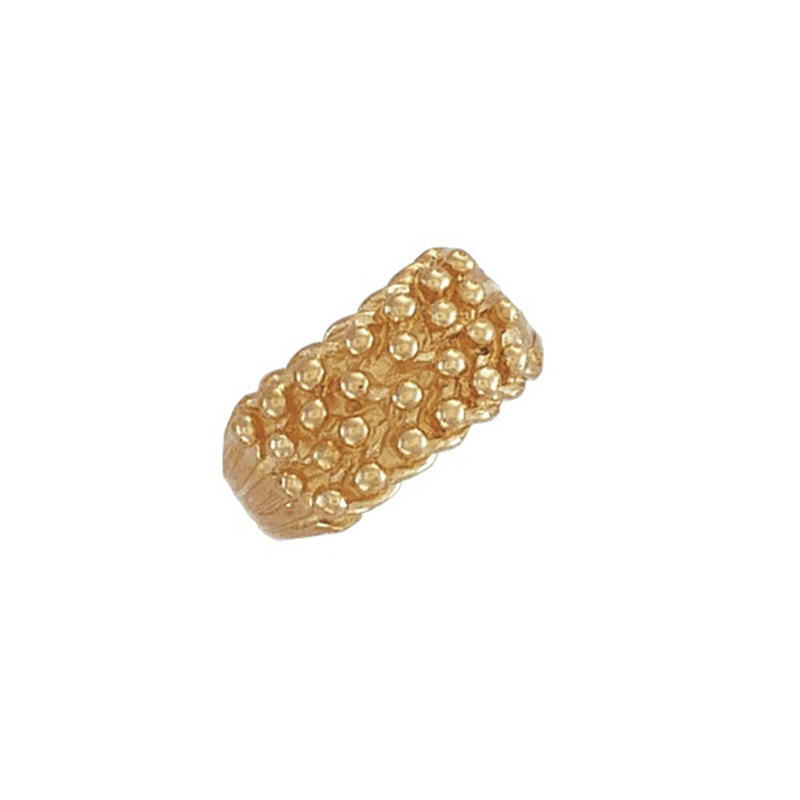
The Anatomy of the Era: The introduction of the 3-row, 4-row, and 5-row woven patterns. Sculpted in wax before being cast in solid 9ct gold, the texture mimicked the opulent look of wearing four individual rings stacked together, fused into one indestructible piece.

Test Your Knowledge
1 / 3The Heavyweight Legacy
Today, the keeper ring has entirely shed its original utilitarian purpose. It is no longer a guard ring; it is the main event. It stands as one of the few pieces of traditional jewellery that completely transcends class, beloved across the UK as a profound statement of personal success and heritage.
While modern jewellery manufacturing has largely shifted toward hollow, mass-produced pieces designed to save on metal costs, the authentic keeper ring staunchly refuses to compromise.
The KeeperRings Standard: Our collection is cast using the exact same principles established centuries ago. They are poured solid. They are unyielding. They carry immense physical weight on the hand. And above all, they are independently struck with the UK Assay Office hallmark, guaranteeing that the legacy of the metal matches the legacy of the design.